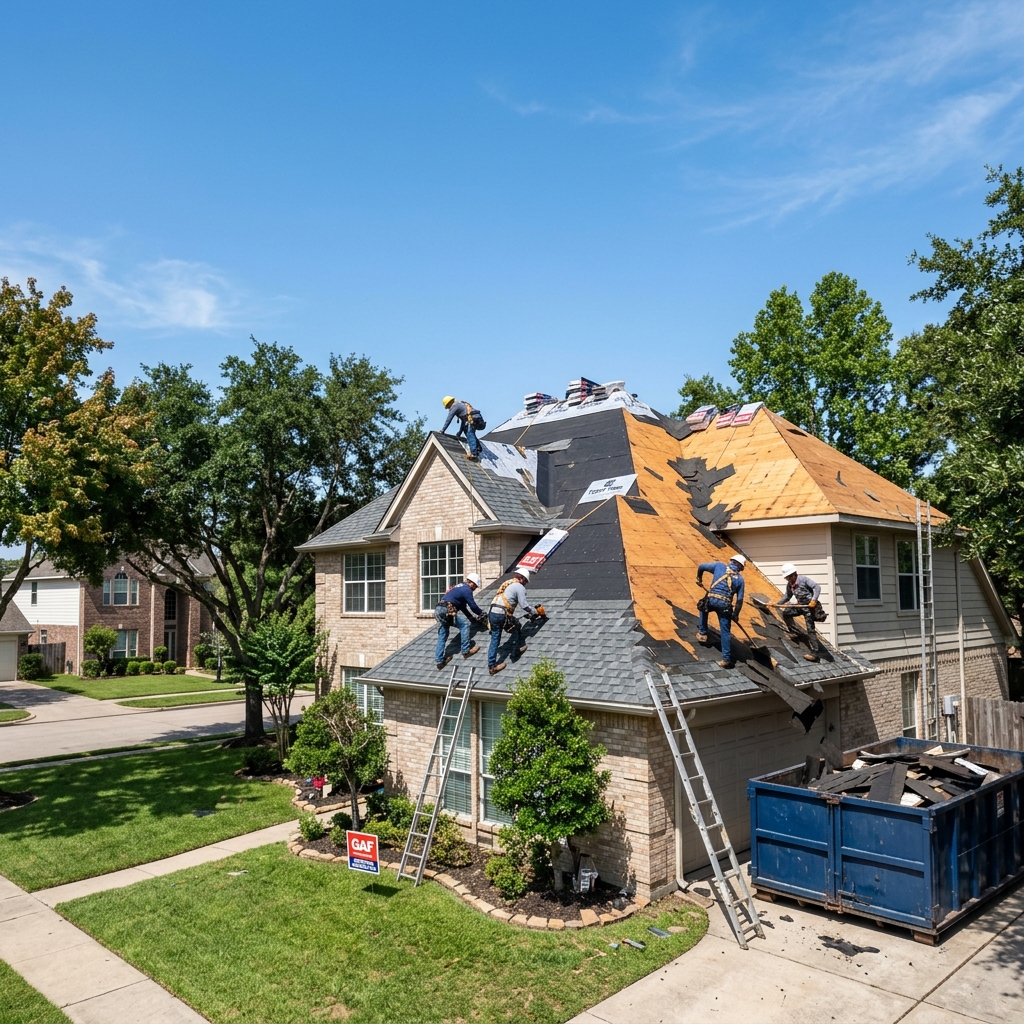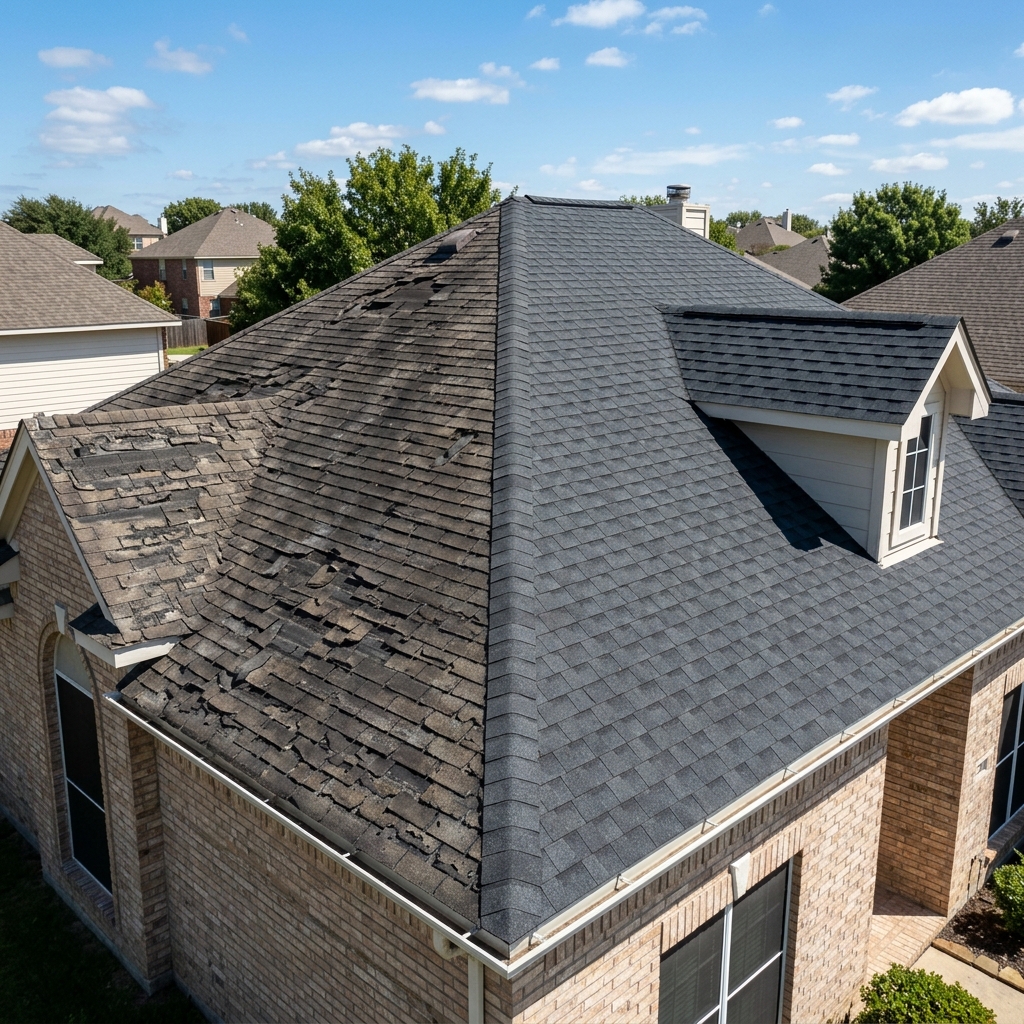

Highway 290 cuts through the Cypress area bringing thousands of vehicles, construction projects, and constant activity. If your home sits within a mile of this corridor — neighborhoods like Cypress Mill, Cypress Crossing, or sections near Mueschke Road — your roof takes a beating that homes deeper in residential subdivisions simply don't experience.
Homes near Highway 290 in Cypress experience 15-25% faster roof wear due to increased wind turbulence, airborne debris from construction zones, and vibration from heavy truck traffic. Regular inspections every 12-18 months are essential for early problem detection.
Wind Turbulence Along the Highway Corridor
Large commercial vehicles moving at 60-70 mph along Highway 290 create significant wind turbulence. Homes near the highway experience more frequent gusts that lift shingle edges and work fasteners loose over time. We've replaced more wind-damaged shingles per square on homes near the 290 corridor than in protected neighborhoods like Bridgeland or Fairfield.
The problem compounds during storm season. When sustained winds from a tropical system combine with highway-generated turbulence, homes closest to the road suffer disproportionate damage. Ridge caps and edge shingles are the first to go.
Construction Debris and Airborne Particles
The ongoing Highway 290 widening project and surrounding commercial development generate significant airborne debris. Fine particles settle on roof surfaces, clogging valleys and blocking gutters. Larger debris — gravel, metal fragments, wood chips — can impact shingles directly during high winds.
We've pulled construction gravel out of roof valleys on homes along Telge Road that had accumulated enough material to redirect water flow and cause leaks at flashing points. This isn't something homeowners think to check, but it's a genuine issue near active construction zones.
- Gutter blockage: Construction dust and fine debris builds up faster, requiring quarterly cleaning instead of the typical semi-annual schedule.
- Valley damage: Gravel and debris collects in roof valleys, creating dam points that redirect water under shingles.
- Shingle surface wear: Airborne particles act like fine sandpaper on your shingles, accelerating granule loss and UV degradation.
Vibration from Heavy Traffic
This is the factor most people overlook entirely. Heavy 18-wheelers running along Highway 290 create ground vibration that transfers through your home's foundation and framing. Over years, this subtle but constant vibration can loosen roofing nails, separate flashing from wall joints, and cause hairline cracks in vent pipe boots.
We've seen homes within 500 feet of the highway where pipe boot seals cracked years earlier than expected. The vibration essentially fatigues the rubber over time, similar to how a paper clip breaks when you bend it back and forth repeatedly.
If you live within a half-mile of Highway 290, schedule a roof inspection every 12-18 months instead of the standard 2-3 year cycle. Catching vibration-related fastener loosening early prevents much larger problems during storm season.
How to Protect Your Roof Near the Highway
- Use high-wind-rated shingles: When it's time for roof replacement, choose shingles rated for 130+ mph winds. GAF Timberline HDZ and CertainTeed Landmark Pro both carry strong wind warranties.
- Install 6-nail pattern: Standard installation uses 4 nails per shingle. High-wind areas near 290 benefit from a 6-nail pattern that dramatically improves wind resistance.
- Clean gutters quarterly: Construction debris means more frequent maintenance. Clogged gutters lead to fascia rot and water backup under roof edges.
- Add drip edge flashing: Proper drip edge prevents wind-driven rain from getting under shingles at the roof edge — critical for highway-exposed homes.
- Inspect flashing annually: Vibration loosens flashing seals. Annual inspection catches failing sealant before water gets through.